A manufacturer-led pilot — run independently of Aether — fitted the aeBooster to a MAN truck-mixer working live concrete deliveries in Croatia. Diesel use fell from 85 to 75 litres per shift. The operator approved on the spot, and all six mixers were fitted in a single day.
The customer is a regional ready-mix concrete producer in Croatia, running a fleet of MAN truck-mixers that haul wet concrete from its batching plant out to job sites across the day. For a concrete operation, diesel is one of the largest and most visible costs on the books — and a stubborn one, because the duty cycle is set by the work, not the driver.
The trial was carried out by the device manufacturer's own field team as part of a manufacturer deployment — not by Aether Fleet Solutions. The figures below are the result of that independent deployment, measured on the operator's own fuel records.
A concrete truck-mixer is brutal on diesel. The drum turns continuously to keep the load from setting — pulling engine power even while the truck is parked. The day is stop-start through town, with long stretches of idling while the truck loads at the plant and discharges on site, all under a heavy, constant payload.
That makes fuel burn per shift both high and remarkably consistent — which is exactly why it is a clean thing to baseline. A mixer that reliably burns 85 litres a shift gives you an honest, repeatable number to measure against.
The manufacturer's team fitted the aeBooster to a working MAN truck-mixer and tracked diesel use per shift against the truck's established baseline — same plant, same kind of routes, same drivers.
The aeBooster was fitted on the fuel line ahead of the engine — a passive device with no moving parts, no ECU connection, and no change to the mixer's drive or PTO. The truck went back to work the same day.
Diesel consumption was compared shift-to-shift against the truck's known baseline of about 85 litres, using the operator's own fuel records rather than any lab cycle.
Per-shift diesel use settled at about 75 litres — roughly 10 litres saved on every shift, a reduction of about 11.8%, with no change to the truck, the route, or the driver.
With the pilot proven, the operator moved to convert the whole fleet. All six MAN truck-mixers were fitted in one day — a passive inline install per truck, no calibration change, no downtime beyond the fitting itself — and the fleet stayed in service.

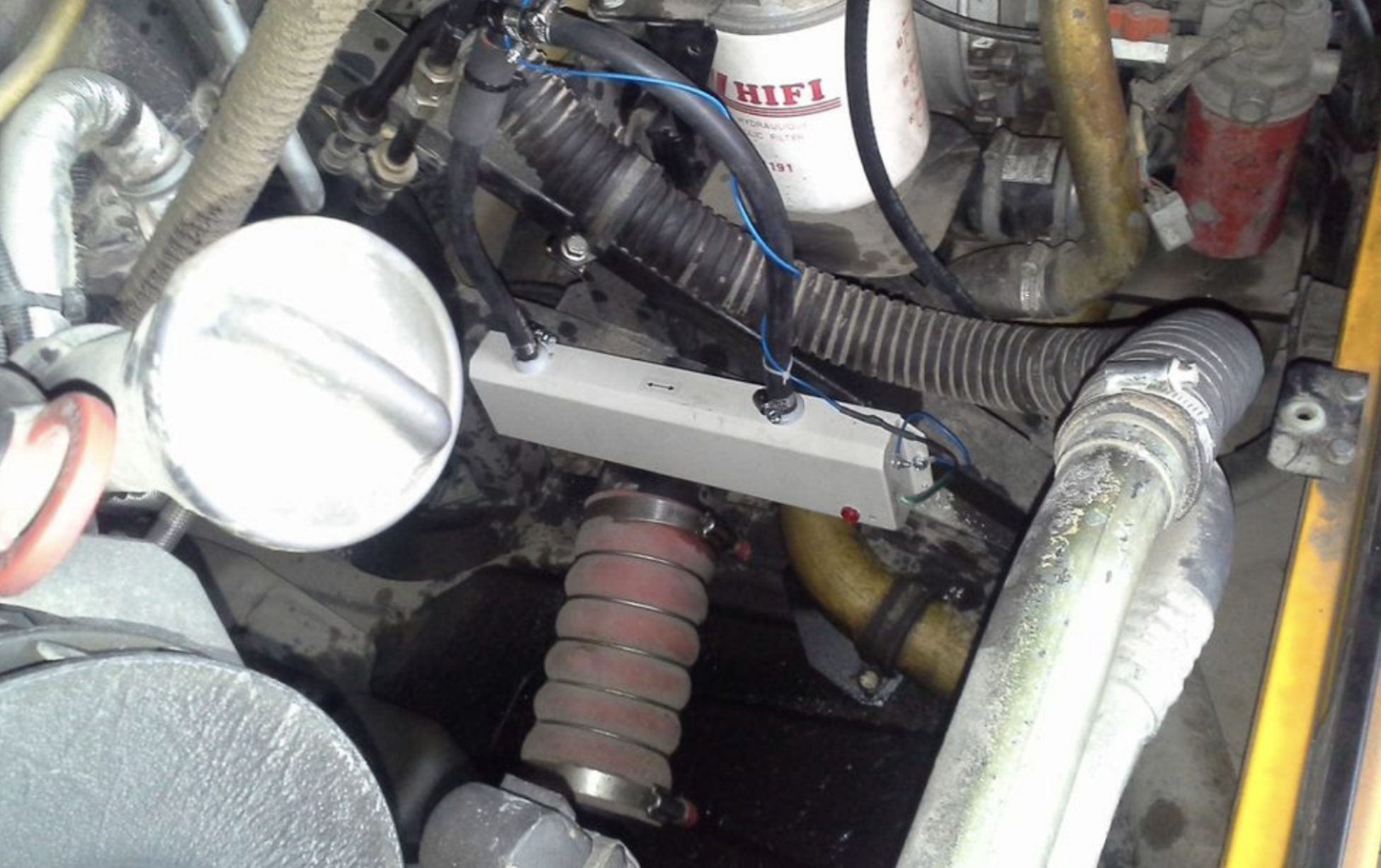
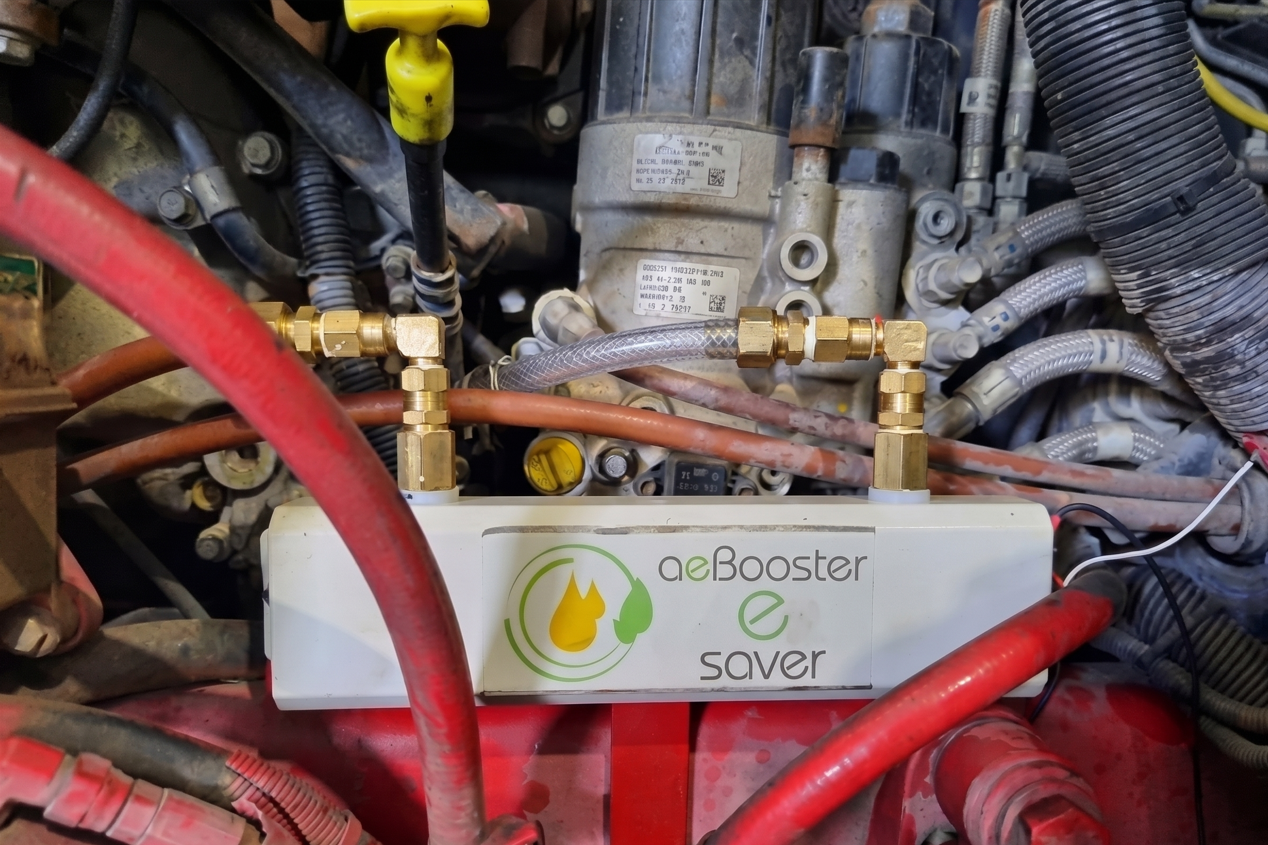
On the MAN truck-mixer, diesel fell from 85 to 75 litres per shift — roughly 11.8%. Across the six-truck fleet, that is on the order of 60 litres of diesel a day, every working day, with no change to trucks, routes, or drivers. The operator was convinced enough by the pilot to convert all six mixers at once.
This result didn't come from a bench or a brochure — it came from a manufacturer's field deployment on a customer's own mixers, measured against the operator's own per-shift fuel numbers, on one of the harshest duty cycles diesel runs. The strongest endorsement isn't the percentage; it's that the operator fitted the entire fleet in a day off the back of a single pilot.
We'll build a baseline from your fuel and telematics data, install on a pilot unit at our cost, and measure the result on your numbers — to a 6% verified floor, or you owe nothing.
Request a verification pilot